Starting with a working relationship
Rachel first knew my work through BabySquare, where she managed the Burnaby store. She liked the marketing materials I created and felt that my visual approach suited her own small business. Around the winter of 2018–2019, she asked me to help with its first logo and promotional materials.
I also developed the original Chinese brand name, which the business used over the years. That initial request became an ongoing collaboration. As the business changed, I continued supporting the way it presented its products, campaigns, and customer-facing experiences.
Building the brand’s customer-facing foundations
Naming
Original Chinese brand name
Identity
Initial logo and later brand materials
Campaigns
Promotional posters and recurring offers
Keeping the brand connected to the business
The business initially focused on sourcing Canadian products for customers in China. It later shifted towards Japanese products for customers in Canada, with Rachel handling customer orders and a Japan-based partner managing sourcing and shipping.
The audience and product mix changed with that shift. WeChat groups became an important channel, and the range included baby products, beauty, skincare, clothing, snacks, and luxury goods. My work expanded into updated brand materials, seasonal and prepaid-credit campaigns, promotional posters, and successive versions of the shopping bags.
The practical challenge was continuity: the business needed materials for different products and occasions while still feeling like the same business. I worked across these recurring needs over time, rather than treating each campaign as the end of the relationship.
A changing operating context
Earlier model
Canadian products for customers in China
Later model
Japanese products for customers in Canada
Partner responsibilities
Canadian customer orders; Japan-based sourcing and shipping
Extending the experience into mobile commerce
When Rachel commissioned a WeChat mini-program, I designed its customer-facing UI, UX layouts, and promotional graphics. A separate developer handled the build. My contribution sat in how the storefront was organized and presented to customers.
I also designed mobile Taobao storefront presentation for Hazelnut Select Studio and the partner’s pearl jewellery brand. These projects extended the collaboration beyond individual campaign assets into the places where customers browsed products.
Clear responsibilities in digital delivery
My contribution
Customer-facing UI, UX layout, and promotional graphics
Technical implementation
Mini-program development by a separate developer
Giving a premium product a physical setting
In 2023, Rachel introduced me to her Japan-based pearl jewellery partner for a brand identity project. The relationship later extended to their Vancouver pearl exhibition.
The 2025 format relied on WeChat promotion and VIP appointments to view jewellery. For 2026, I recommended creating a dedicated physical display area. My reasoning was straightforward: a premium jewellery purchase deserved a setting that could communicate the brand and help people understand what they were looking at.
I developed the stand’s visual presentation, including large-format brand and product-information panels, event signage, and promotional materials. The layout brought the Japanese store background, pearl information, and event communication into one setting.
The display was installed and used for the exhibition. The photograph below documents that implementation: a dedicated setting brought the jewellery, brand background, and product information together for visitors.
From recommendation to implementation
Context → judgment → action → implemented outcome
- ContextAppointment-led jewellery viewing in 2025
- JudgmentGive premium jewellery a dedicated brand and product-information setting
- ActionDesign brand panels, product-information displays, and event materials
- Implemented outcomeA physical display installed for the 2026 exhibition
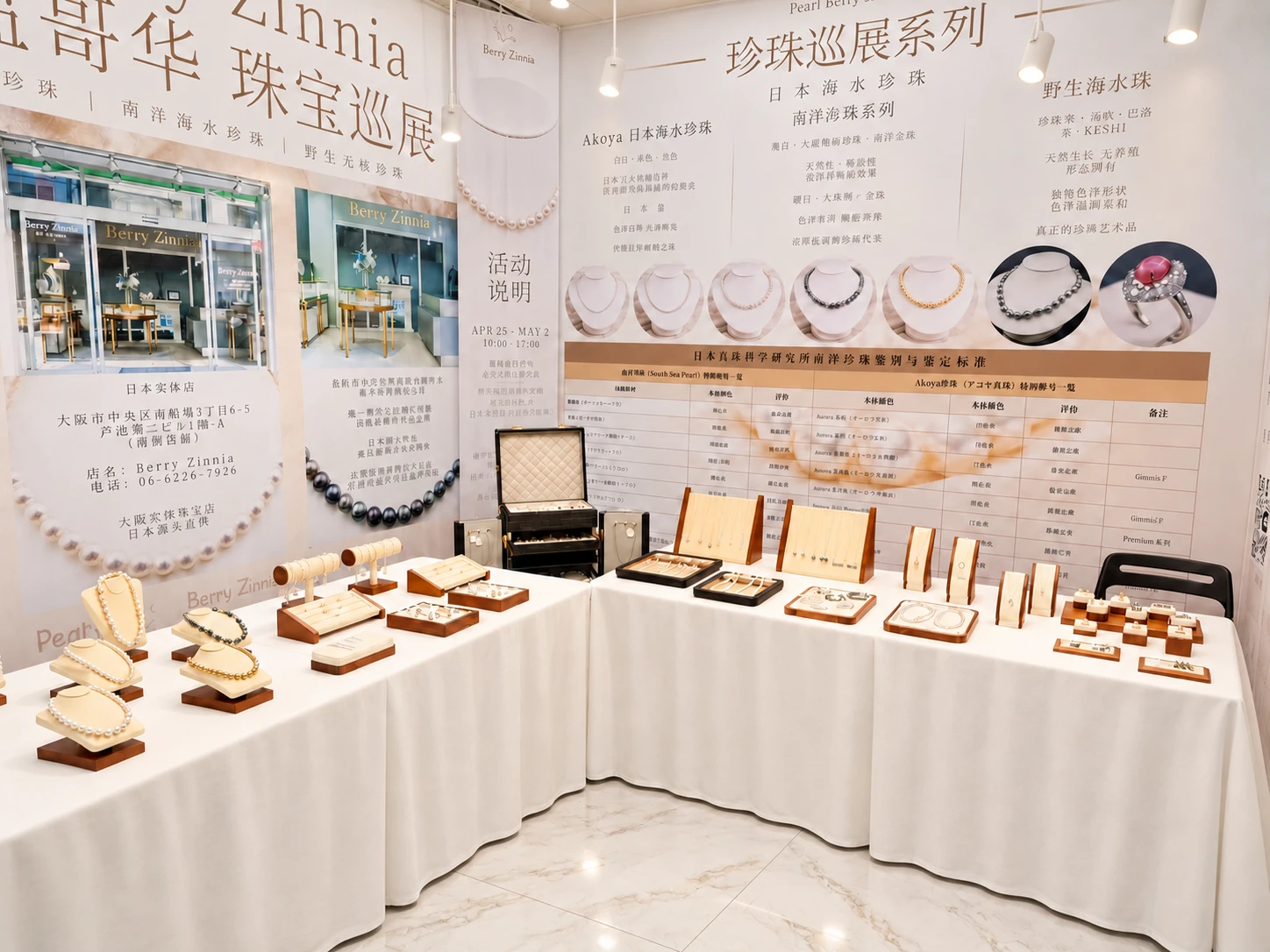
Project figure
Exhibition photograph, environment retouched.
Understanding what a small business needs as it grows
I have watched Hazelnut Select Studio grow from a side business into a broader cross-border retail operation, with more products, new storefronts, and in-person events. Staying involved over several years helped me understand how its marketing needs changed alongside the business.
That close view shaped my understanding of local small-business marketing. An owner is managing orders, sourcing, and customer relationships alongside the next campaign. Marketing needs to fit that working rhythm, give customers clear information, and keep the business recognizable across changing products and channels.
My role is to turn those needs into useful decisions and materials: a campaign message for the current offer, a storefront layout that presents the range clearly, or an exhibition setting suited to the product. Long-term collaboration gives me the context to make those choices with the business, and to carry what we learn into the next request.
The needs behind the next request
A current offer
Explain the campaign clearly
A changing range
Present products in a useful format
Multiple touchpoints
Keep the brand recognizable online and in person
My role: developing the original Chinese brand name, brand and marketing materials, storefront UI/UX and layout, and exhibition visual presentation. Business operations, product sourcing, and software development remained with the owner, partner, and developer.